
Best Flooring for Kitchens in Liverpool: A Practical Guide for Homes, Flats and Rentals
A Liverpool kitchen floor has a harder life than most people admit.
It gets wet shoes from the back door. It gets tea spills near the worktop. It gets chair legs dragged across it. It gets pet bowls, school bags, dropped pans, food splashes, mop water, and daily foot traffic.
Then there is the Liverpool weather. Rain falls throughout the year in the city, with November usually wetter than April, so hallways and kitchens often deal with more moisture than people expect.
That is why the best flooring for kitchens in Liverpool is not just the floor that looks good in a photo. It is the floor that handles water, cleaning, movement, and real family use.
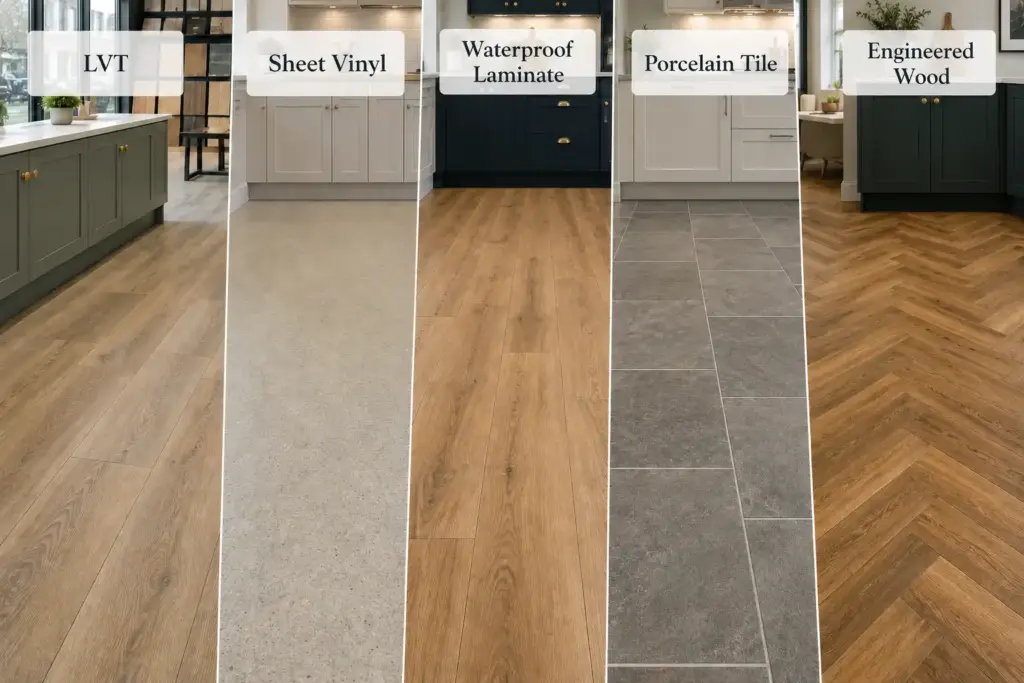
For most kitchens, LVT is the strongest all-round choice. Sheet vinyl is the best budget choice. Waterproof laminate can work in careful homes. Porcelain tile suits people who want a hard, premium finish. Engineered wood is beautiful, but it needs more care.
The real answer depends on your kitchen, your subfloor, your budget, and how you live.
Quick Answer: What Is the Best Flooring for Kitchens in Liverpool?
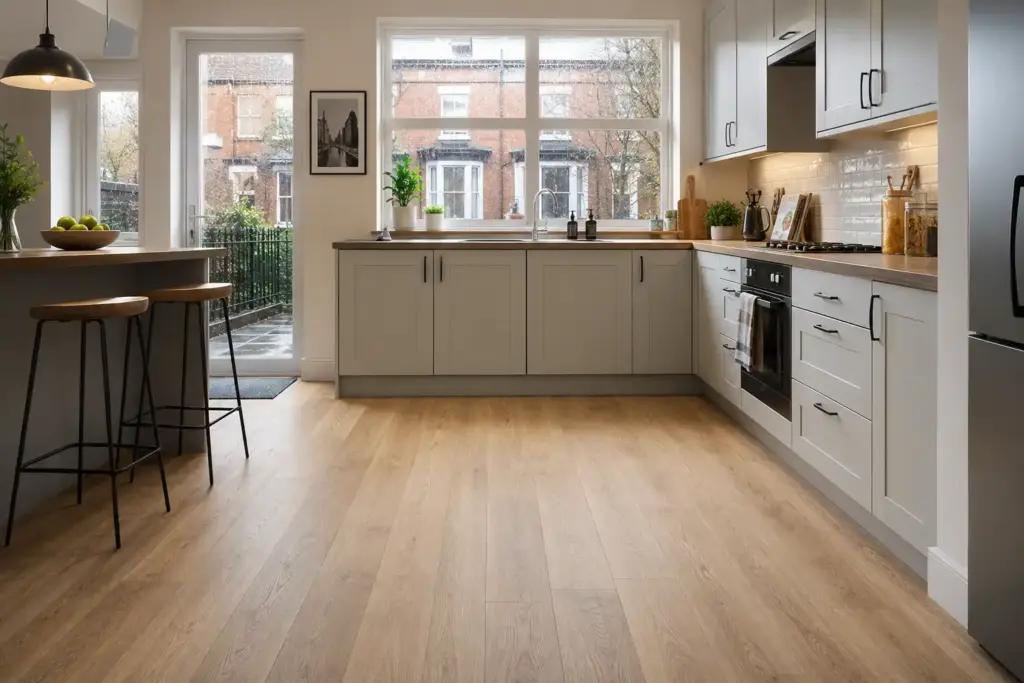
The best flooring for kitchens in Liverpool is usually LVT because it gives the strongest balance of water resistance, comfort, durability, design choice, and easy cleaning. For tighter budgets, sheet vinyl is a smart option. For rental homes, good vinyl or LVT often gives better value than laminate or wood.
If you want one safe answer, choose LVT.
Karndean describes its LVT as easy to clean, waterproof, and comfortable underfoot. Amtico also describes its waterproof click vinyl as suitable for kitchens and bathrooms.
That does not mean every kitchen must have expensive LVT. Some homes in Liverpool only need a practical vinyl floor. Some open-plan kitchens need a better design finish. Some landlords need something tough, tidy, and easy to replace.
Here is the simple rule. Choose the floor based on how the kitchen is used, not just how the sample looks.

Why Kitchen Flooring in Liverpool Needs Different Thinking
Liverpool homes are not all the same. A kitchen in a Dingle terrace is different from a kitchen in a Mossley Hill family home. A city centre apartment is different from a rental in Kensington or Bootle. The right kitchen floor depends on moisture, subfloor condition, traffic, and daily cleaning.
This is where many guides fail.
They write one answer for every home. That is not how flooring works.
Older terraced homes in Dingle, Toxteth, Wavertree, and parts of Aigburth may have older floorboards, uneven subfloors, or small kitchen layouts. If the base is poor, even a good floor can fail. Modern homes in Allerton, Woolton, and Mossley Hill often have larger open-plan kitchens. These need flooring that looks good across a wider space.
Liverpool city flats may need flooring that reduces noise and handles daily use without feeling cold.
Rental homes need a different mindset again. The floor must be practical, easy to clean, and sensible on cost. Haven Carpets & Flooring is based at 96 Aigburth Road in Dingle and supplies and fits carpets, laminate, vinyl, LVT, and wood flooring across Liverpool.
That local angle matters because kitchen flooring is not only about the product. It is about the room.
Kitchen Flooring Comparison Table
This table gives a quick way to compare the main kitchen flooring options. LVT wins for most homes, but vinyl, laminate, tile, and engineered wood each have a place when chosen for the right kitchen.
|
Flooring type |
Best for |
Good points |
Watch out for |
|---|---|---|---|
|
LVT |
Busy kitchens, open-plan spaces, family homes |
Water friendly, strong, stylish, easy to clean |
Costs more than basic vinyl |
|
Sheet vinyl |
Budget kitchens, rentals, small kitchens |
Affordable, few joins, soft underfoot |
Can dent or tear if low quality |
|
Waterproof laminate |
Careful homes wanting wood effect |
Good value, warm look, quick fitting |
Not all laminate suits kitchens |
|
Porcelain tile |
Premium kitchens, underfloor heating |
Very hardwearing, water resistant |
Cold, hard, and needs good fitting |
|
Engineered wood |
Dining kitchens and low-splash areas |
Real wood feel, warm appearance |
Needs care around water |
|
Solid wood |
Mostly not advised for kitchens |
Beautiful natural look |
Sensitive to moisture and movement |
UK cost guides show that LVT, laminate, vinyl, and wood costs can vary widely by product quality, fitting method, subfloor prep, and labour. Checkatrade lists average LVT fitting at about £45 per m², while other company gives example kitchen flooring totals for a 14 m² kitchen across sheet vinyl, vinyl tile, LVT, laminate, engineered wood, and hardwood.
Is LVT the Best Flooring for Liverpool Kitchens?
Yes, LVT is usually the best flooring for kitchens in Liverpool because it handles spills, daily cleaning, foot traffic, and design needs better than most other choices. It works especially well in family kitchens, rental homes, open-plan spaces, and busy downstairs areas
Here is what nobody tells you.
The floor that wins in a showroom is not always the floor that wins after two winters. A kitchen floor must survive real life. LVT does this well because it gives the look of wood or stone without many of the problems that come with real wood or cold tile.
It is also more forgiving underfoot than porcelain. That matters when you stand cooking, washing dishes, or making tea three times a day. LVT also suits Liverpool homes because it can work in both modern and older spaces. A herringbone LVT can look smart in an Aigburth kitchen. A stone-effect LVT can suit a city flat. A warm oak-effect LVT can soften a family kitchen in Woolton or Allerton.
The common mistake is choosing LVT only by colour.
- Wear layer
- Fitting method
- Subfloor condition
- Door clearance
- Edge sealing
- Room transitions
- Underfloor heating suitability
When Is Sheet Vinyl Better Than LVT?
Sheet vinyl is better than LVT when the customer wants a lower-cost kitchen floor, fewer joins, quick cleaning, and a practical finish. It is a strong choice for small kitchens, rental properties, utility rooms, and homes where budget matters more than a premium plank or tile effect.
Many people hear “vinyl” and think of old, thin flooring from years ago. That is unfair. Good modern vinyl can look clean, last well, and make sense in a kitchen.
A sheet vinyl floor can be especially useful in smaller kitchens because it has fewer joins. Fewer joins can mean fewer places for water to work through when the floor is fitted properly.
It is also softer and warmer than tile. For many families, that matters more than a luxury finish.
The weak point is quality. Cheap vinyl can mark, tear, or look flat. Better vinyl costs more, but it can still be cheaper than LVT.
For landlords in Liverpool, vinyl often makes sense. It keeps the property clean and usable without pushing the budget too high. For student lets, HMOs, and basic rental kitchens, practical flooring often beats fancy flooring.
Is Laminate Flooring Good for Kitchens?
Laminate can work in some kitchens, but it is not the safest choice for wet or splash-prone kitchens. If you choose laminate, pick a water-resistant or waterproof product and make sure the edges, joins, and subfloor are handled correctly.
Laminate is popular because it gives a wood look at a fair price. It can look warm. It can be quick to fit. It can suit dining areas and open-plan spaces where the kitchen is not too wet. But here is the honest point.
Standard laminate is risky in kitchens.
Water can damage the core if it gets through joins or edges. That is why cheap laminate near sinks, dishwashers, and back doors can become a problem. This does not mean laminate is always wrong. It means it must be chosen carefully.
Use laminate if:
- The kitchen is dry and well ventilated
- You clean spills quickly
- You want a wood-effect look on a sensible budget
- The product is rated for kitchen use
- The fitter checks expansion gaps and door bars properly
Avoid laminate if:
- The kitchen gets frequent spills
- Pets knock water bowls over
- The back door opens straight into the kitchen
- The subfloor has damp issues
- The property is a rental with heavy use
Are Tiles the Best Choice for a Kitchen Floor?
Porcelain tile is one of the hardest kitchen flooring options, but it is not always the most comfortable. It suits premium kitchens, heavy use, and underfloor heating. It may not suit families who want warmth, softness, or easier repairs.
Tiles look strong because they are strong. A tiled floor can handle water, heat, and daily cleaning. It can also look expensive when fitted well. But tile has its own problems. It can feel cold. It can be hard underfoot. Dropped plates often break. Grout can stain. Poor fitting can lead to cracks.
In older Liverpool homes, tile needs serious subfloor preparation. If the base moves, the tile or grout may crack. That is why tiling over old floorboards without the right prep is asking for trouble.
Tile suits:
- Modern kitchens
- Underfloor heating
- Large open-plan spaces
- Stone or marble-style designs
- Homes where durability matters most
Tile may not suit:
- Uneven older floors
- Small homes needing warmth
- Families wanting a softer feel
- Customers who dislike grout cleaning
My honest view is simple.
Tile is brilliant when the base is right and the budget allows. LVT is usually easier to live with.
Common Kitchen Flooring Mistakes to Avoid
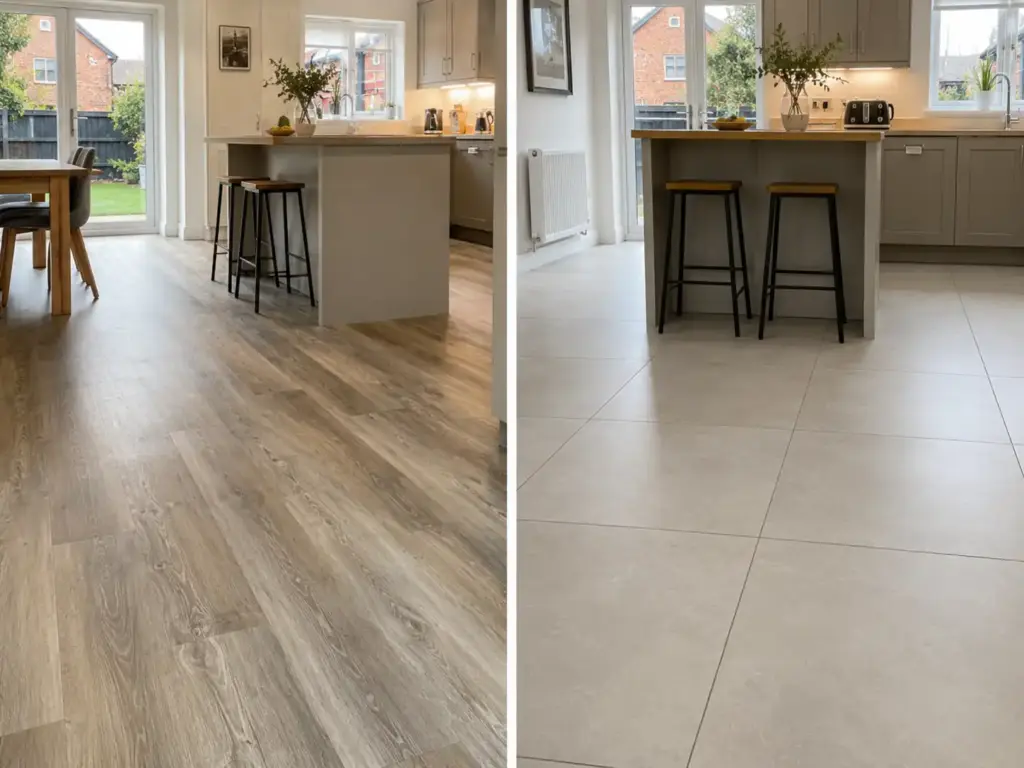
The biggest kitchen flooring mistakes are choosing by colour only, ignoring subfloor preparation, using the wrong product near water, buying cheap flooring for a heavy-use kitchen, and not checking samples in the room’s real light.
Here are the mistakes I would warn against.
Mistake 1: Choosing the cheapest floor online
Cheap flooring can look fine in a small photo. In real life, it may feel thin, mark quickly, or fail near joins.
Mistake 2: Ignoring the subfloor
No floor performs well on a poor base. LVT, vinyl, laminate, and tile all need the right preparation. If the existing covering needs to come up first, ask about old flooring removal during the home measure.
Mistake 3: Using standard laminate near heavy water
Some laminate handles light moisture. That does not make every laminate a kitchen floor.
Mistake 4: Picking black or white flooring without thinking
Black shows dust. White shows marks. Mid-tones are often easier to live with.
Mistake 5: Forgetting transitions
Kitchen floors often meet hallways, dining rooms, or back doors. Door bars and trims affect the final look.
Mistake 6: Not seeing samples in person
Kitchen light changes everything. A floor can look warm in the showroom and grey at home.
This is why visiting a local showroom helps. Haven Carpets & Flooring lets customers view carpet, laminate, vinyl, LVT, engineered wood, and solid wood samples in person at Aigburth Road.
Final Recommendation
The best flooring for kitchens in Liverpool is LVT for most homes.
It gives the best mix of water resistance, comfort, cleaning, style, and long-term value. It works in older terraces, modern family homes, open-plan kitchens, and busy rentals.
But do not ignore vinyl. Good sheet vinyl is still one of the smartest choices for budget kitchens and rental properties.
Laminate can work, but only if chosen carefully. Tile is strong, but colder and harder. Engineered wood is beautiful, but it needs more care